

.png)
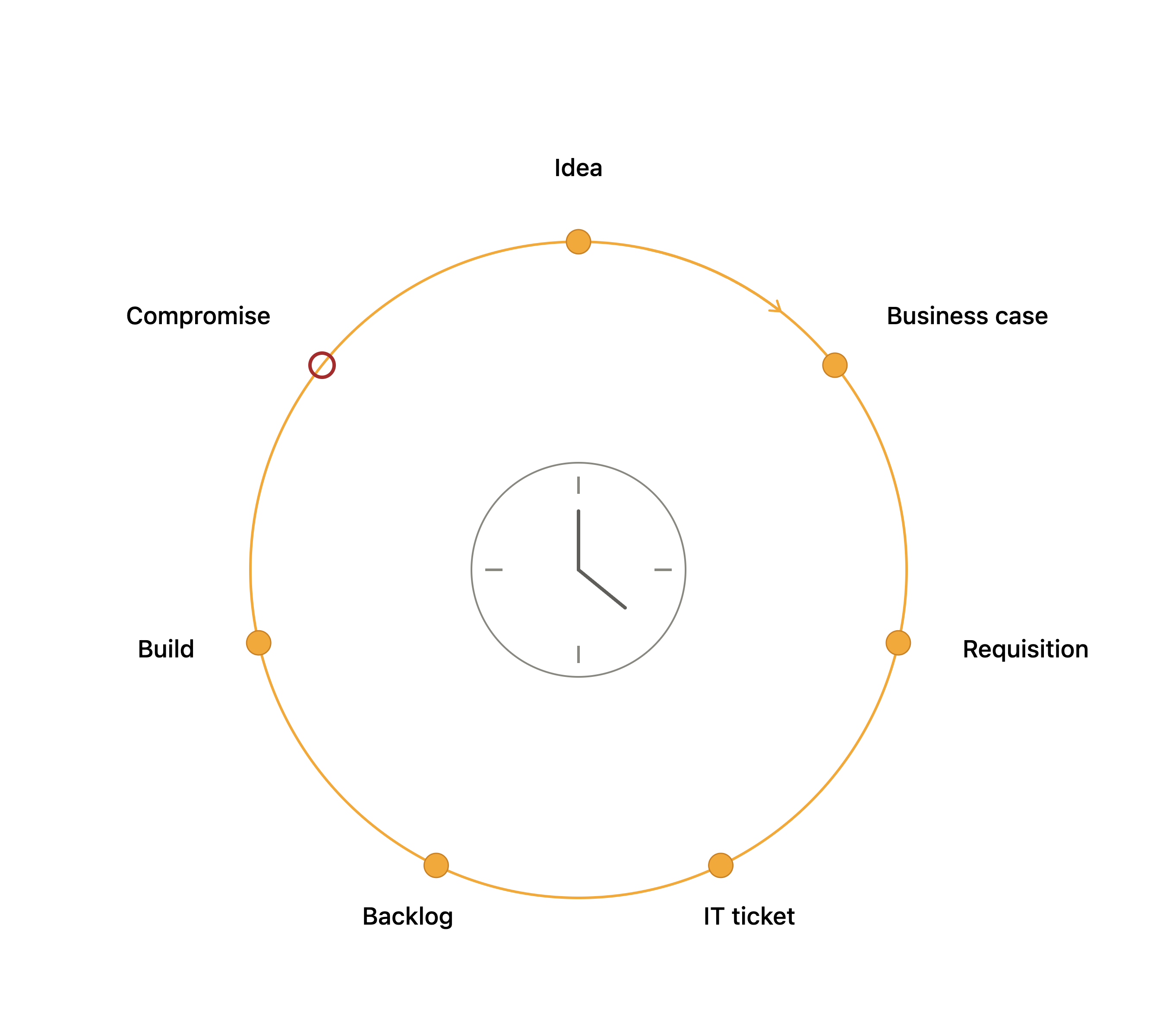
A requisition, an IT ticket, a backlog, a compromise. By the time anything gets built, it isn't the idea any more. That's why most people stop having them.
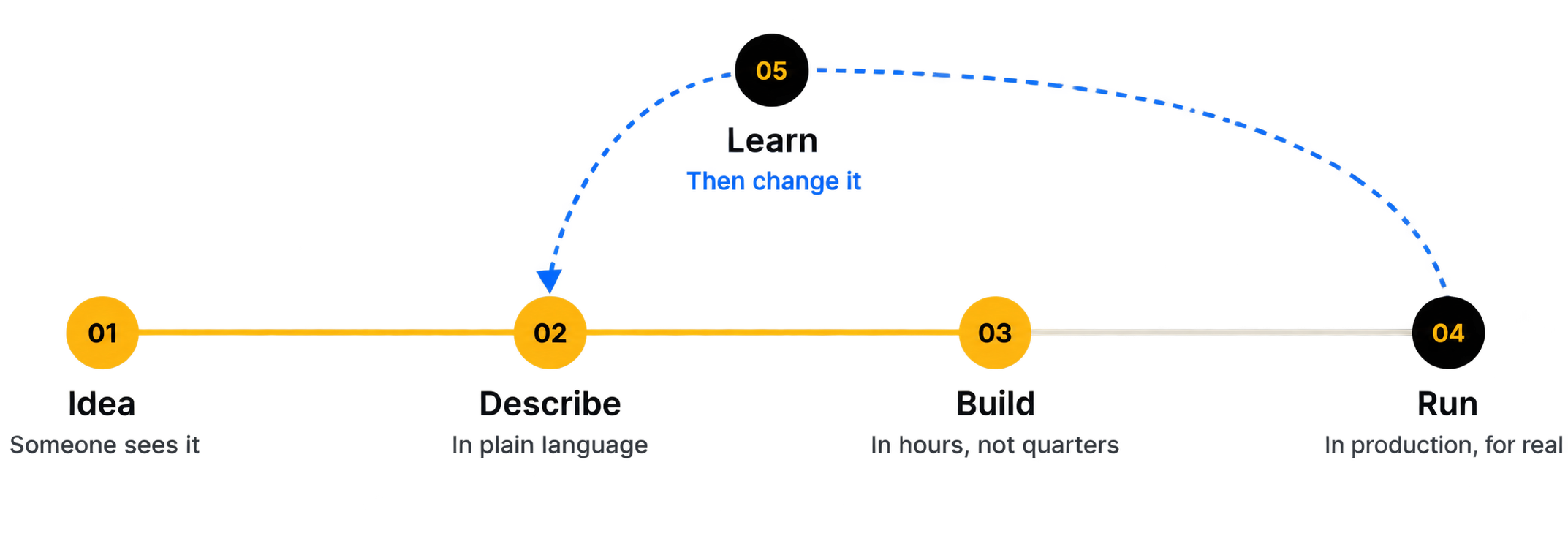
Five steps instead of seven, and the last one loops back on purpose rather than by failure. You are not writing a specification for someone else to interpret. You are describing what you need, in plain language, and watching it get built.
Procurement teams know exactly which process is broken. What stops them is the distance between describing it and having it running. Studio closes that distance.

A conversation, not a form. Talk about the problem — third-party risk, invoice triage, onboarding — and Voice captures the requirement, synthesises it back to you, and shows you how the same problem has been solved elsewhere.

The requirement becomes a visible workflow: every step, every decision point, who or what acts. Studio surfaces the choices it has made and asks you to confirm them, then optimises the flow and writes up the personas and journeys behind it.

The builder. Architect turns the design into real ORO configuration — agentic steps, reviewer routing, request types, input forms, downstream triggers — and packages it for import, with design documentation and a test script.
Real product. Representative data. Your problem
You see the whole screen, the whole time.
A third-party risk agent, built and proved end to end in one take. A spoken conversation about supplier risk becomes a requirement set, Architect turns it into ORO configuration, and the package is imported into an empty tenant. The generated process opens with its agentic triage step, a conditional compliance review, three screening checks and a downstream trigger. Publish it, and users have a new tile. Then it gets tested twice, with opposite results. A low-risk supplier on a corporate email domain draws a single screening and runs straight through to the end. A Russian supplier, quoting in US dollars from a personal Gmail address, draws two — sanctions and adverse media for the jurisdiction and the cross-border currency, and an email domain check for the free-mail account — while bank verification is declined, because that supplier is already on file. Every decision is written to the record with the evidence behind it.
.svg)
A customer set the brief on video and we built against it in front of the room. Michel at Roche asked for two million supplier invoices and queries arriving in shared inboxes to be triaged, matched against purchase orders and contracts, and the exceptions routed — value mismatches, contract volume breaches — to a human or to an agent. The requirements were captured live from his transcript and modelled on stage. Architect built while the rest of the agenda ran, and purchase orders and contracts were loaded so the result could be tested on real data. After the break, emails went to a live address in front of the audience — some plain questions, some with invoices attached — and the agent handled each one: answer the query, or create the invoice and push it into the flow.

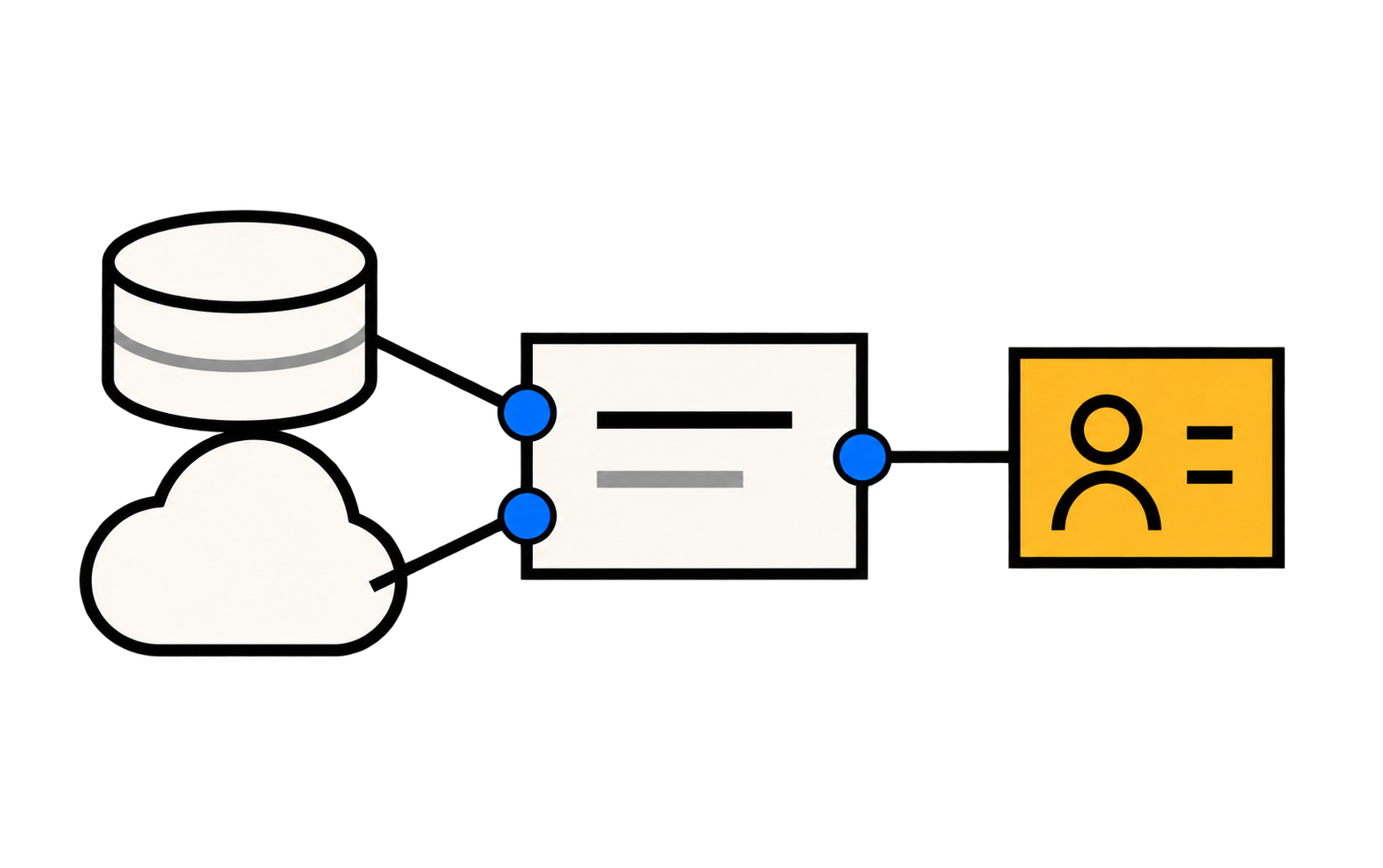
Describe the problem in your own words, or bring a transcript you already have — a customer call, a discovery session, a supplier complaint. Voice reads it, synthesises the requirement, and plays back comparable solutions.
Design Studio lays the requirement out as a flow and shows you the decisions it has made, so the assumptions are visible while they're still cheap to change.

Hand the design over and walk away. It composes the agentic triage step, the conditional reviewer approval, the individual checks and the downstream triggers, then packages the lot for your tenant.

Bulk-import in the admin panel. The process arrives with its request types and forms attached — check the steps read the way you expect, publish, and your users have a new tile.

Pick a supplier, drop in a proposal PDF. ORO's native extraction agents don't just OCR the document, they interpret it and populate the form. Submit, and the workflow agents triage, decide, check, route and log.
Results from orchestration already running in production across ORO customers.
reduction in supplier onboarding time
more supplier checks for bank fraud
saved through bank fraud prevention
Explore the latest research, customer stories and perspectives on orchestration, AI, and the future of procurement.
AI is on every enterprise's roadmap right now. And although it should be, if not done correctly, adding AI can create critical gaps that can cause more disconnection.
Exception paths, edge cases, the approval thresholds your policy actually requires. The generated flow covers the main line; hardening covers the rest.
AI is on every enterprise's roadmap right now. And although it should be, if not done correctly, adding AI can create critical gaps that can cause more disconnection.
Your ERP, your supplier master, your contract store, your identity provider. Studio builds the workflow; integration puts it on your real data.
AI is on every enterprise's roadmap right now. And although it should be, if not done correctly, adding AI can create critical gaps that can cause more disconnection.
Against volume, against your awkward cases, with the people who will use it. Architect ships a test script for exactly this — use it, then change what it finds.
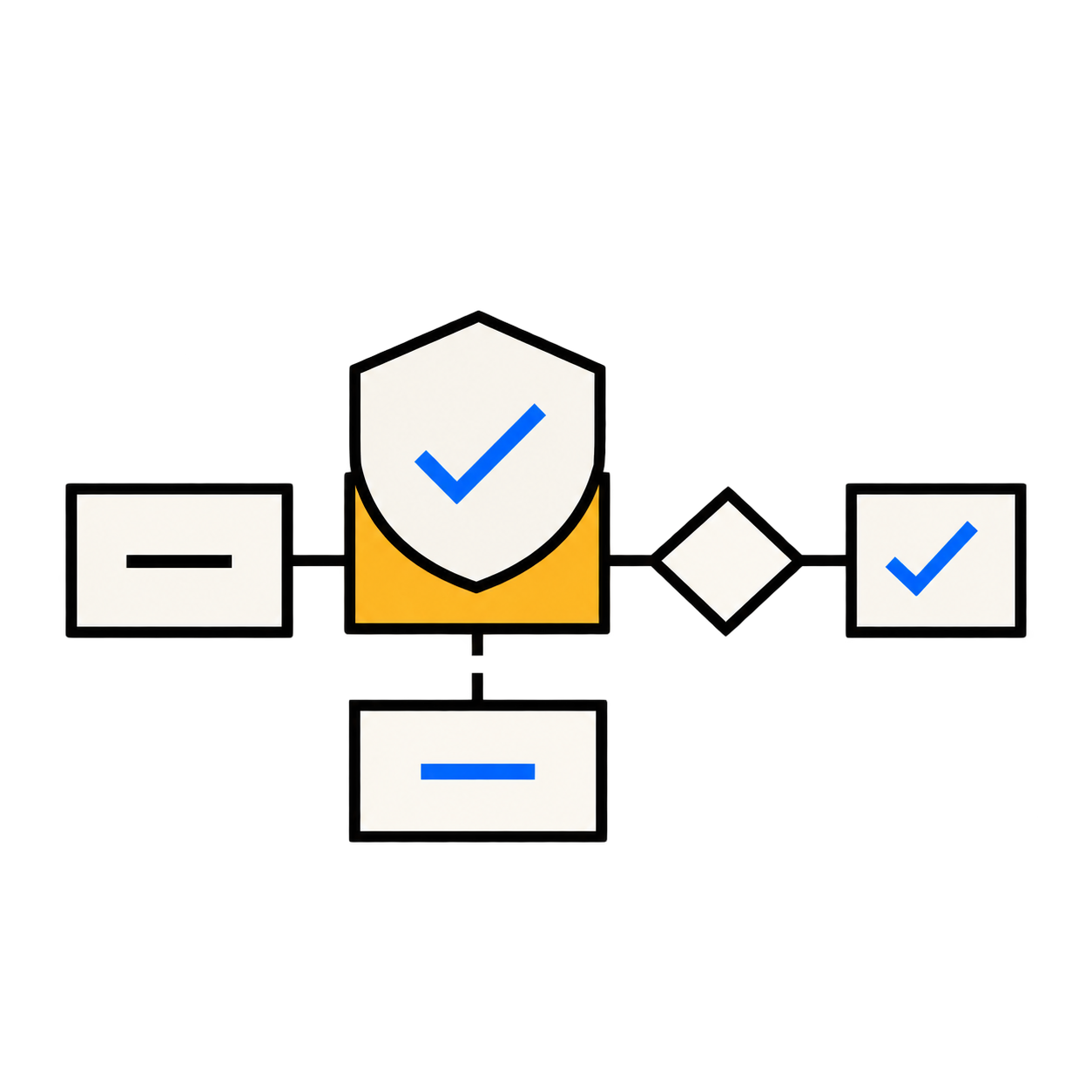
Architect builds the conditional reviewer step in by default. The agent triages and recommends; a compliance reviewer can approve, redirect or override before any check runs.
No opaque scoring. Each recommendation is written to the record with the evidence behind it — jurisdiction, currency, contact domain, supplier status — and the risk score is logged.
Studio's output is ordinary ORO configuration. Open the process, read the steps, change them, publish. You can edit anything it built without going back through Studio.
SOC 1 and SOC 2 compliant, and the first platform in the world to earn ISO 42001 certification for responsible AI. Bring your own LLM wherever your policies require it.
Conversation to requirement set to flow model to importable configuration, with design documentation and a test script. Demonstrated in both recordings above.
Today the design hands off to Architect as a requirement set. Next, the optimised flow becomes the build input directly, with master data — user groups, currencies, first-class objects, functional requirement matrices — resolved against your live tenant rather than assumed.
Architect currently takes around ten minutes to compose a workflow. Fast enough to build during a coffee break — we want it fast enough to build during the meeting.
Swim lanes by role, expected duration per step, then a thousand synthetic transactions run through the model to find the bottleneck before anything reaches your tenant.

.avif)